
Reading and Watching, 8/13
The North Water, Red Rabbit, and Atom Egoyan

Since my last dispatch in this space I finished reading Michael McDowell’s Blackwater, republished now as a single volume but originally a series of six novellas. I’ve been working through McDowell’s oeuvre, as previously mentioned, in pursuit of another Elementals, one of the most effortlessly frightening short novels you are ever likely to find; Blackwater is not that, but this is not to say it was a disappointment. Though it is occasionally frightening, and once or twice very frightening, it’s not much like a straight horror novel at all. Its supernatural elements frame and punctuate what is really a sprawling Southern family saga, spanning as much as a half century in the lives of a wealthy Alabama logging clan and their strange little town on the Blackwater River. McDowell’s ever-present sense of place and character make the strange crabbed familial machinations of these eccentric dynasts genuinely engaging, such that for long stretches you can easily forget the mysterious forces which shape and inflect their lives. His evident understanding of these people, and his equally evident sympathy for some of them, is characteristically unleavened by pity; this is not a grim or unpleasant book, but the rhythms of the river are strange and occasionally murderous, and even the novel’s most self-assured characters are never entirely in control. This is a fine piece of writing, rich and lively, and more than earns its length. By the end I was sorry to say goodbye to these people, this place, these deep and brackish and secretive waters.
Waters deeper and more pitiless still were the focus of my next read, Ian McGuire’s The North Water, which I have been meaning to get to for years. I will add little to the book’s reputation when I say that it’s remarkable, bleak and scabrous, and totally fearless in its depiction of one of mankind’s bloodiest frontiers. I use this word frontier advisedly; at risk of flirting with self-parody, I was struck while reading this by the ways in which the drama of the early modern Atlantic can be rendered as a kind of western. The two are linked by their connection with European colonialism, of course, and by a sense of staggering and omnipresent violence: in the near-eradication of the North Water Polynya’s whale population there are echoes of North American buffalo, whose population collapse after a century of orgiastic settler bloodshed similarly brought a gradual end to a cycle of accumulation and its attendant lifestyles. They are linked also, more abstractly, by a sense of world-historical processes made manifest through millions of small, venal, forgettable acts. There are no ‘great men’ in The North Water, as there were none in the average cattle drive or mining camp, just the numberless throng of individuals making their lives, by any means necessary and in whatever way they can, against a landscape on which social forces have begun to describe murderous new paths. Such was the making of the modern world. That it was made, at times, by semiferal animals is a central concern of The North Water, which reeks and festers with blood and shit, a clear-eyed evocation of a physically and morally malodorous world. “Behold the Man,” the book begins, and behold him it does, in all his desperate fetid glory. I read it in two sittings; if this sounds to your taste, I imagine you will do the same.
Returning to the North American frontier, I spent some time with an engaging and inventive horror-western called Red Rabbit by Alex Grecian. At risk of flying a slightly embarrassing flag, former Deadlands players might recognize something of the Weird West in Grecian’s novel, which populates its Kansas frontier with witches and ghosts and shapeshifters and demons. The prose is generally propulsive rather than elegant, though it’s never artless, and by the second half, when Grecian has gotten all his pieces on the board, there is a headlong momentum which makes the book hard to put down. Red Rabbit’s presentation of its supernatural forces, too, is aesthetically focused and coherent; everything here seems plausibly born from the folk superstitions and whispered prayers of early American settlers, while at the same time individual characters and concepts are managed with fluency and originality. If not nearly as floridly direct and visceral with its violence or sex as the truly vicious North Water, Red Rabbit is not shy about situating its action in a grounded physical world, and there is a pleasingly matter-of-fact sensibility that enables suggestive physical detail to be offered up economically. I confess I am very often disappointed by contemporary horror that comes highly recommended; there are some prevailing tendencies in parts of the genre to which I’m absolutely allergic, and some pitfalls even critically-lauded authors fail to avoid. Grecian dodges almost all of them, and I’m happy to give his work a further look.
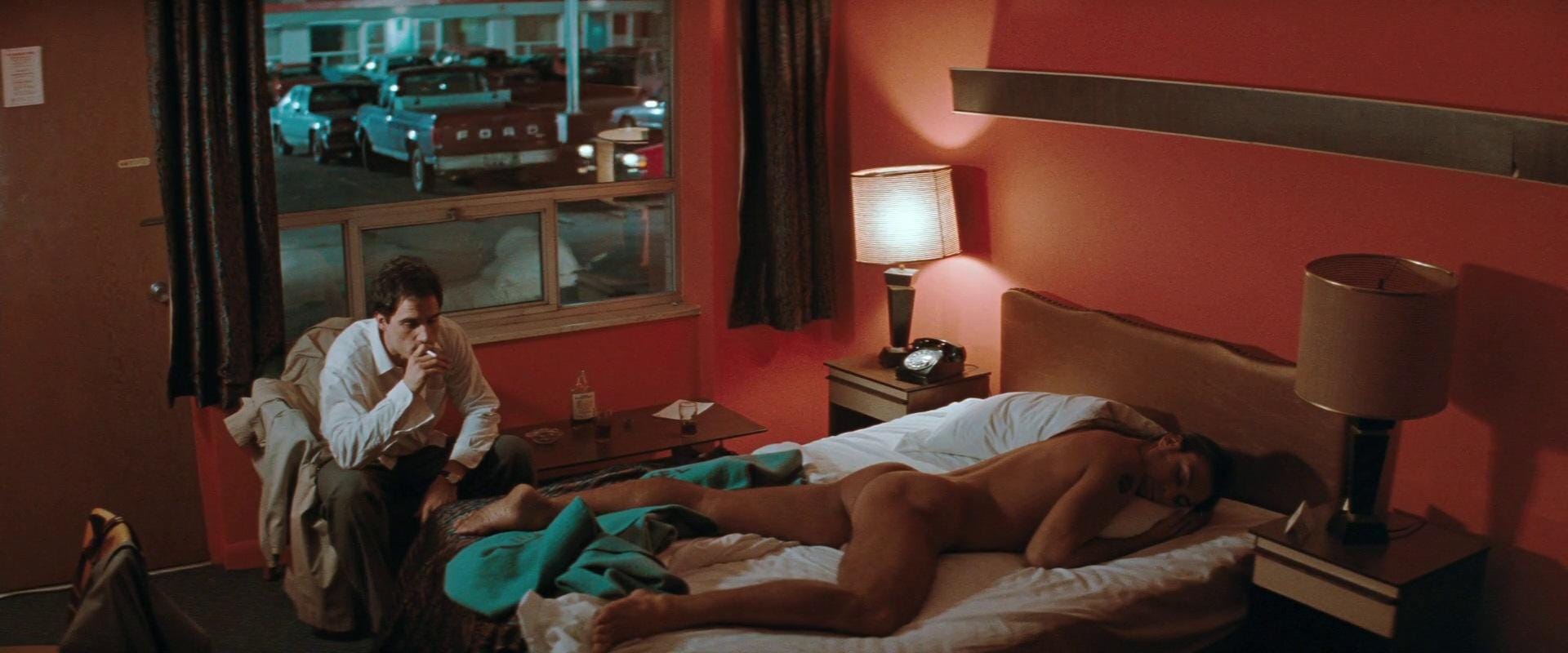
On the watching side, one of my great personal discoveries in 2025 has been the work of Atom Egoyan, a filmmaker whose films had always intrigued me on paper, but for some reason never seriously crossed my path. I was lucky enough to attend a 35mm screening of The Adjuster (1991) in February, programmed by the redoubtable Olivia Hunter Willke, and it knocked me directly on my ass: emotionally rich and provocative, with a wonderful Elias Koteas performance (but I repeat myself) and a totally distinctive visual and tonal sensibility. I’ve since been slowly working forward (for whatever reason, not backward, yet) through Egoyan’s filmography, which abounds with his authorial preoccupations: transaction and exchange and their warping effect on human relations, the achingly tender realities that can underly disturbing or perverse appearances (and, emphatically, vice versa), the way human beings attempt to reckon with reality-warping personal loss. In addition to The Adjuster I’ve now watched the thrillingly personal and quietly, cumulatively haunting Calendar (1993); Egoyan’s acknowledged masterpiece, the stunning, heartwrenching, deceptively nightmarish Exotica (1994); and his greatest critical success to date, The Sweet Hereafter (1997), not quite as good as the other three in my view but still a moving and carefully controlled reflection on these key themes. The only partial misfire to date for me has been his follow-up to The Sweet Hereafter, Felicia’s Journey (1999), an in-my-view only middlingly successful but contextually fascinating experiment in adjusting the customary balance of Egoyan’s careful contradictions. Comparisons to Lynch and Cronenberg are almost always facile these days, and I make them only with great reluctance, but Egoyan has a capacity for creating hermetically sealed filmic worlds—surreal and mannered, but not cartoonishly stylized—that I associate with those two filmmakers, and very few others. A few months into my acquaintance with him, Egoyan already feels like a new pantheon filmmaker.
Take care, everyone; until next time.